From Seeking to Becoming: Why a Shaykh Is Not Meant to Be Followed Forever
Imagine waking up on a road you don’t recognize.
It is dark—so dark it feels endless. Cold, damp air clings to your skin. A thick fog surrounds you, limiting your sight to only a few uncertain steps ahead. You don’t know how you got there. You don’t know where you’re going.
You only know that you are alone.
Somewhere in the distance, you hear sounds—creatures, perhaps. You cannot see them, but they sound close enough to harm you. Your heart races. You begin walking, not out of clarity, but out of fear of staying still.
Step by step, blind and trembling.
At some point, the weight of it all breaks you. You cry as you walk, convinced that this road may be the end of you.
And then—
Headlights.
A vehicle approaches through the fog. At first, you think your mind is playing tricks on you. But the light grows stronger, closer.
Before you can even call out, the vehicle stops beside you.
The driver opens the window, smiles gently, and says:
“Don’t fear. Let me help you.”
You hesitate.
But what other choice do you have?
You enter, confused yet deeply relieved. There is something familiar about him, though you know you have never met.
Without a word, he hands you a warm blanket and a cup of hot tea.
“Do not fear,” he repeats.
His voice—steady, grounded—does something your thoughts could not. It anchors you. For the first time since you woke up on that road, your body softens.
He glances at you and asks:
“Where are you going?”
You freeze.
The question feels simple, but it exposes everything.
Tears come before words.
“I… I don’t know,” you admit, ashamed. “I just don’t want to be on this dark path anymore.”
He laughs—not mockingly, but with a kind of tenderness that feels like truth breaking through illusion.
“Good,” he says. “If you don’t want darkness, then you must be seeking light.”
You find yourself smiling through your tears.
“Yes… I think that’s it. I just don’t know where the light is.”
He continues driving.
The road remains dark. The fog remains thick. The curves feel sharp, unpredictable. You grip your seat at times, amazed that he does not hesitate—not even once.
Finally, you ask:
“Do you know this road so well that the fog doesn’t affect you?”
He nods.
“Yes. And if you are here, it means you are meant to learn how to drive it too.”
You don’t fully understand what he means.
But something inside you knows this matters.
Eventually, after what seemed like a long drive, you both arrive at a beautiful cabin in the middle of the forest. Despite the fog and the bad weather, you can't miss it because it is so bright!

Warm light glows from within. It feels like safety, like arrival, like home.
He parks the vehicle and steps out.
You instinctively move to follow him—but he stops you.
“No,” he says gently. “Stay.”
Confusion returns.
Then he places something in your hand.
Keys.
“These are for you,” he says. “Everything you need is already inside the vehicle.”
“There is food, water, a blanket, hot tea, a map… and a user manual, in case something breaks.”
Your heart begins to race again.
You shake your head.
“I can’t do this. I don’t know how to drive. I don’t know this road. Please… don’t leave me.”
He smiles—in a very calm and reassuring way.
“You have everything you need,” he repeats.
“Allah is with you.”
And with that, he turns, walks into the cabin… and disappears.
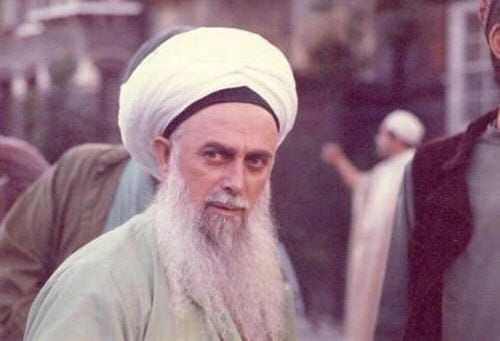
That man was Shaykh Nazim al-Haqqani.
Now, I understand what each of that journey symbolized.
The meanings revealed themselves slowly over time:
- The dark path: my lower self, my limiting beliefs.
- The fog: my trauma, my wounds, my fears, my ignorance.
- The vehicle: his teachings—his books, his sohbet, his transmission.
- The keys: my willingness, my responsibility, my choice to move.
And then, more quietly:
- The food: my daily prayers and dhikr—the nourishment of remembrance and discipline.
- The blanket: the warmth created through gratitude for all Allah has given me already. When I would focus on what I don't have, the blanket wouldn't warm me.
- The water: my emotions—meant to be felt, not suppressed, cleansing when allowed to flow.
- The hot tea: presence—those sacred pauses where the heart softens and receives, where the nervous system learns safety again.
- The map: the Quran—guidance that orients, but does not walk for you.
- The user manual: inner awareness—learning what resonates about how our own soul works, how we break, how we heal, what helps us feel safe, how we return to alignment when we forget.
Just as cars come with user manuals containing everything needed for their proper use and care, each car model and year—carries its own subtle differences. Our souls are no different, and that is why no path can ever truly be identical to another.
What most people get wrong
Many people want the story to end differently.
They want to stay in the passenger seat forever.
They want the shaykh to keep driving. To decide every turn. To remove every uncertainty. To protect them from every feeling.
But that is not guidance.
That is dependency.
A true shaykh does not raise followers.
He raises adults.
He does not make you smaller so you can stay close to him.
He strengthens you so you can stand—fully—before Allah.
Like a parent, his role is not to keep you dependent forever.
His role is to prepare you to walk… to become unrestrained in your divine potential, and disciplined in your lower self—so that you may eventually drive on your own, while knowing that his mature, healthy love is always there for you.
I can easily close my eyes and see Shaykh Nazim al-Haqqani clearly. I feel our connection strongly, and at times—when I cannot hear the guidance of my own heart clearly—I find myself asking him how to approach a situation, or what I should communicate to you all.
And he always reminds me to quiet the ego and listen.
He brings me back to everything I have learned through his teachings, his books, and through the many guides he has introduced me to along the way.
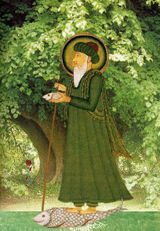
Another guide who held me very closely during my darkest hours was Shaykh Abdul Qadir al-Jilani. His presence was a constant in my life for a long time as you can see from the frequent posts I created on Instagram about his teachings, until—perhaps—he saw that I was doing better.
I have not connected with him in a while, but I know that whenever I may need a reminder, he is there.
Shaykh Nazim taught me that a guide can be anyone who is at least one step ahead of me—and that they are recognized through the heart, not through what they wear or what they preach.
The courage to drive
The moment Shaykh Nazim handed me the keys, was the moment the real path began.
Not when I was comforted.
Not when I was reassured.
But when I was trusted.
Trusted to continue.
Trusted to get lost and find my way again.
Trusted to face the fog without needing someone else to remove it for me.
That is love in its most mature form.
I did bay'ah in 2019, after I understood that Al-Khidr was guiding me.
I never met Shaykh Nazim in this physical world, but it was never necessary.
Just as Uwais al-Qarani did not need to meet the Prophet ﷺ physically in order to love him deeply and live by his teachings, we too—living closer to the end of times—can experience that same joy and comfort.
It is found in the expansion that love creates within the heart when we commit to its purification.
Some connections are not bound by proximity.
Some teachings are not limited to presence.
And some guides…
do not walk the path for you—
they place you behind the wheel
and remind you:
Allah is already with you.
As I keep walking this beautiful path, the more I understand the role I am being asked to hold.
Not to be followed,
but to remind you how to stand.
Not to keep you seeking,
but to walk with you until you begin becoming.
This is not new. This has always been the invitation of Islam, and the heart of Sufism.
But we have lingered too long in our wounds, in our dependencies, in the comfort of being led.
And now… the time calls for something else.
Islam—and the world we are moving into—need more people willing to become grounded, awake, and inwardly free.
Spiritual warriors, just as the Prophet ﷺ called us to be.


