How I Access My Unconscious Mind to Remove Hidden Blocks to Allah
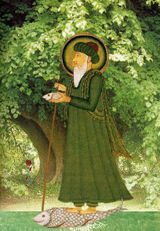

I believe many people who sincerely ask Allah to heal them, begin to notice dreams with symbolic depth. That does not mean everyone will. Allah communicates with each of us in different ways, according to His wisdom. Dreams do not make anyone's spiritual journey better or worse. They are simply one of the many ways Allah may choose to illuminate what has remained hidden.
Why is the unconscious mind so important?
Because many of the beliefs that prevent us from remembering who we truly are and from trusting Allah more deeply live there without our conscious awareness.
These beliefs keep self-sabotaging us and making our lives more difficult and heavy than how Allah intended us to live.
Many of us on the spiritual path have been called back to Allah through the adversity we experienced in childhood. Perhaps one of the purposes hidden within these painful experiences is that, through seeking healing, we discover the light and mercy of Allah within our wounds—and eventually, we free ourselves to become advocates for healing so that fewer children and adults have to carry the pain that we once carried.
Many adults in our communities live without awareness of how their own unhealed wounds and traumas have shaped their lives, emotions, perceptions, and reactions.
In the spiritual tradition, we are reminded that the veils will eventually be lifted, and what was hidden will become clear. The journey of healing is, in part, the journey of allowing Allah to reveal these hidden places of the heart while we still have the opportunity to transform them.
To me, this is one of the greatest dangers of leaving our unconscious beliefs unexplored.
Adults who have experienced trauma may struggle to identify, express, and regulate their emotions. They may have difficulty understanding their own inner experiences, their own inner power and may respond to life through patterns of anxiety, anger, overthinking, withdrawal, or emotional overwhelm.
Another great danger I see is that trauma can leave adults feeling powerless, causing them to believe that their life is chaotic and painful simply because Allah has intended it to remain that way.
Sadly, many people reach the end of their lives without ever discovering that they had the ability, with Allah's guidance and mercy, to transform their relationship with the burdens they carried in their minds and souls.
One of the reasons this can happen is that human beings naturally seek what feels familiar and safe, even when that familiarity causes suffering. Sometimes, remaining within a painful but familiar pattern can feel less frightening than facing the uncertainty, responsibility, and inner work required for healing.
For some, it may even feel easier to believe that their suffering is simply something Allah has chosen for them than to face the difficult but liberating process of examining their own beliefs, healing their wounds, and taking the steps Allah has placed within their capacity.
Trauma can distort our perception of ourselves, the world, and even our relationship with Allah, making it difficult to recognize that His tests can also contain invitations toward healing, growth, and deeper closeness to Him.
When a child learns that the world is unsafe, or that even the people they depend on may not always be able to protect them, they may become vigilant and guarded. They may begin to interpret situations through the lens of survival rather than safety.
These protective responses often continue into adulthood, even when the original danger is no longer present.
Traumatic experiences often leave us with implicit beliefs—beliefs we live out without even realizing they are shaping our lives.
I am only now beginning to release a belief that was formed when I was around five and seven years old. It was only after asking Allah to help me understand the blocks I still carried around enjoyment and having fun, as I shared in last week's post, that the next piece of the puzzle emerged.
Last night I had a dream that brought me a breakthrough.
Before I continue, I want to make an important disclaimer. I do not believe every dream has a deeper meaning for our healing or spiritual journey. I only pay attention to dreams that leave a strong emotional imprint on me—curiosity, awe, surprise, fear, or a feeling that something is asking to be understood. If a dream has interesting imagery but leaves no emotional resonance, I simply let it go.
Over the years I have noticed that Allah seems to reveal our inner blocks thematically and gradually. We are rarely shown everything at once.
His wisdom unfolds layer by layer, allowing us to make connections between our present experiences and the pain that has remained locked inside us from the past.
Through this dream I had last night, Allah helped me recognize a belief that had been silently guiding my life for decades:
"If I enjoy something too much, something bad will interrupt it."
Not because the world always works that way, but because some of the most emotionally significant interruptions to joy in my childhood happened exactly that way.
The first memory came back to me immediately.
I was five years old, spending the afternoon with my favorite aunt and cousin. Every week my mother would pick me up, and my cousin and I had a little tradition: we would hear her arrive, hide under the bed together, and laugh while waiting for her to come upstairs and find us.
One day, everything changed.
We heard the car arrive as usual and hid under the bed, laughing. But my mother never came upstairs.
Instead, my aunt went down and came back to tell me that my mother had suddenly become very ill and could not come up. Soon afterward, my mother was hospitalized, the adults around me were saying that only a miracle could save her, and my grandmother asked me to pray that Allah would spare her life.
Alhamdulillah, Allah saved her, but looking back now, I realize that my young nervous system quietly learned something else.
Children of that age cannot reason the way adults can. They cannot say, "This was a medical emergency that had nothing to do with the joy I was experiencing five minutes earlier."
Instead, they often form unconscious associations.
Without realizing it, I learned that life could change completely in the middle of happiness.
Then another memory surfaced.
I was seven years old, playing in the playground of a restaurant with the children of my mother's friends. We were all happily playing when I suddenly noticed something that the other children didn't: our mothers were no longer sitting at the table.
I asked the other children, "Where did our moms go?"
None of them seemed concerned. They simply kept playing.
But I couldn't.
Ever since my mother's hospitalization, I had developed separation anxiety. Something inside me felt compelled to look for the adults.
As I walked away from the playground, I found one of the mothers lying unconscious on the floor while another adult was calling an ambulance.
I watched as she was taken away and a few days later, she passed away.
Looking back now, I can see how these experiences quietly reinforced the same unconscious expectation:
"If you let your guard down... if you become absorbed in joy... something terrible may happen."
This was never a conscious conclusion.
It was simply the way a child's nervous system tried to make sense of experiences that were far too overwhelming to understand.
One of the most beautiful things about bringing unconscious beliefs into consciousness is that they can finally be examined.
Not by arguing with them, but by asking:
"Is this belief protecting me from the present, or is it protecting me from the past?"
Those are two very different questions.
Today I understand that I was simply a little girl who experienced terrifying interruptions to her sense of safety.
Those adaptations were intelligent responses to circumstances that no child has the capacity to navigate safely without the support of a mature adult who understands the psychological impact these experiences can have on a child.
By the mercy of Allah, I can now begin to distinguish between the little girl who truly had to stay on guard and the current version of me who is learning that there are moments when it is genuinely safe to rest, to laugh, and to let joy last without scanning for a danger to follow it.
The Three Steps I Use to Access My Unconscious Beliefs
Step 1: Notice what stirs your heart.
Pay attention to what leaves an emotional imprint.
This may be a dream, a conversation, something you saw on a film, a post, a recurring life situation, or something that quietly awakens curiosity inside you.
When something keeps asking to be understood, I have learned to pay attention.
Step 2: Ask Allah to reveal the hidden belief.
Rather than trying to force an interpretation, I pray:
"Ya Allah, if there is something You are trying to show me through this experience, please help me understand what unconscious belief is being revealed."
Then I wait patiently.
Sometimes understanding comes quickly.
Sometimes it unfolds over weeks or months as Allah gently connects present experiences with memories I had forgotten.
Step 3: Practice living from the new understanding while entrusting the healing to Allah.
Once the hidden belief becomes visible, I do not try to fight it.
I simply recognize it when it appears.
If I notice myself becoming anxious while enjoying a peaceful moment, I can now gently remind myself:
"This fear belongs to a little girl who had to protect herself. But I am no longer that little girl. It is safe to enjoy this moment now"
Then I entrust that moment to Allah.
Healing is not something I force.
Our responsibility is to become aware and to respond differently each time the old belief arises.
Allah heals our hearts in the way and timing that only He knows.
Every time I choose trust over an old unconscious pattern, I feel that I am saying "yes" to the healing that Allah is already carrying out within me.
When unconscious beliefs become conscious, they gradually lose their power to direct our lives without our awareness.
We become free to respond from the present instead of unconsciously reacting from the past.
For me, this is one of the greatest gifts of healing: not simply understanding myself better, but trusting Allah more deeply as He gently uncovers, one layer at a time, everything that has prevented my heart from resting fully in Him.


