This Is How Sincerity Is Measured


Sincerity, like many things in life, has levels. It is not simply black or white. Because of that, we need to learn how to read between the lines—so we don’t discourage ourselves too quickly, while also protecting ourselves from those who are not sincere with us.
As a general rule, the more sincere we are with ourselves, the more clarity we gain in how we are navigating life. This clarity is what helps us recognize truth from insincerity.
Human beings can easily say: “I’m sincere.” “I truly want to change.” “I want to be closer to Allah.” But the real question is— how do we know that’s actually true?
Because sincerity is one of the easiest things to claim… and one of the hardest things to prove.
Allah knows that human beings take words very lightly, thus He created a system to measure sincerity.
Allah does not measure sincerity by what we say, or even by what we feel.
He measures it through something much more real:
What we do when no one is there to carry us.
And whether we continue… even when it’s hard.
The Quran removes every illusion we try to hide behind.
Quran 3:144 وَمَا مُحَمَّدٌ إِلَّا رَسُولٌۭ قَدْ خَلَتْ مِن قَبْلِهِ ٱلرُّسُلُ ۚ أَفَإِي۟ن مَّاتَ أَوْ قُتِلَ ٱنقَلَبْتُمْ عَلَىٰٓ أَعْقَـٰبِكُمْ ۚ وَمَن يَنقَلِبْ عَلَىٰ عَقِبَيْهِ فَلَن يَضُرَّ ٱللَّهَ شَيْـًۭٔا ۗ وَسَيَجْزِى ٱللَّهُ ٱلشَّـٰكِرِينَ ١٤٤ Mohammad is no more than a messenger; other messengers have gone before him. If he were to die or to be killed, would you regress into disbelief? Those who do so will not harm Allah whatsoever. And Allah will reward those who are grateful.
This verse is powerful. It removes every excuse we try to hold onto.
It reminds us that our faith is not meant to be tied to any person — not even the Prophet ﷺ, not a Shaykh, not a teacher, not a healer.
It asks us directly:
If everything you rely on disappears: people, teachers, shuyukh, support, what is your faith built on?
Because sincerity should never be built through attachment to people, not even to a teacher or a Shaykh.
Our commitment is to Allah alone. If our faith collapses when a person disappears, or when we can't find support, a teacher or a guide, then what are we truly holding onto?
🌱 Sincerity means standing alone
Allah asks something very real from us:
Will you still believe, still strive, still act — even when you feel alone? Another verse makes this even clearer:
Quran 29:2 أَحَسِبَ ٱلنَّاسُ أَن يُتْرَكُوٓا۟ أَن يَقُولُوٓا۟ ءَامَنَّا وَهُمْ لَا يُفْتَنُونَ ٢ Do people think once they say, “We believe,” that they will be left without being put to the test?
Sincerity is tested. Not once, but repeatedly. It is tested when things are difficult. It is tested when guidance feels unclear. It is tested when no one is validating us. And perhaps most importantly — it is tested through our daily actions.
Anyone can say: “I want to grow” “I want to heal” “I want to be closer to Allah” But sincerity begins where comfort ends. If someone says, “I want to heal,” but waits for others to fix them… avoids changing harmful habits… and resists taking responsibility — can we truly call that sincerity?
Sincerity is when our actions begin to align with our words.
That is why this path is the path of alignment between mind and heart.
It means:
- Seeking knowledge consistently
- Taking uncomfortable steps to try new ways of reacting and behaving
- Letting go of what harms us
- Trying again, and again, and again to do better
Allah’s guidance responds to the level of sincerity we show.
So instead of asking, “Why isn’t Allah guiding me?”
We should first ask, “How sincere am I being in my effort?”
As you know, I share my vulnerable moments with you—but I also need to share the moments of success Allah has given me, as proof of what He is teaching us.
Many of you have told me something I also used to struggle with:
“If I pray, do dhikr, and I am religious—why isn’t Allah giving me what I’m asking for? Why does He give to those who have wronged me, or to those who are less religious than me?”
👉The truth is, this question comes from a mindset that needs to be corrected.
I used to think the same way. I felt a sense of injustice—even anger.
I would think: How is it that I’m trying so hard, yet I’m given pain instead of a simple life like others around me?
Alhamdulillah, in His infinite mercy, Allah corrected this way of thinking and brought me out of that painful mindset.
Whether we realize it or not, this question often comes from the ego—from a sense of superiority, and from the belief that Allah owes us something because we are “doing” what we think should earn a reward.
Allah took me out of this mindset when I paused and admitted something difficult:
No matter what I was doing, it wasn’t working.
I was truly lost.
So I turned to Him and said:
“Allah, please guide me.”
That moment—when we stop insisting and start surrendering—
is where humility begins.
Because it is the lower self (the ego) that keeps us stuck in cycles, repeating the same actions that don’t work—just to keep us busy, distracted, and disconnected.
I kept consistently showing Allah that I wanted out of this misery.
How?
For the past 7-8 years, not a single day has gone by where I haven’t tried to do something that shows I am committed to healing my suffering. I wanted Allah to see that I was sincere in wanting to live differently.
I read extensively, trying to understand how to move out of my struggles. I studied my condition from different angles, staying open to what resonated, and not allowing myself to be distracted by what didn’t.
For example, I came to understand that I struggled with what is known in modern psychology as disorganized attachment and codependency. So I kept reading, researching, and listening to what different people had to say about it—always with the intention of seeking a cure.
And slowly, things began to change.
Because in the end, it really comes down to this:
Intention + consistent action = healing.
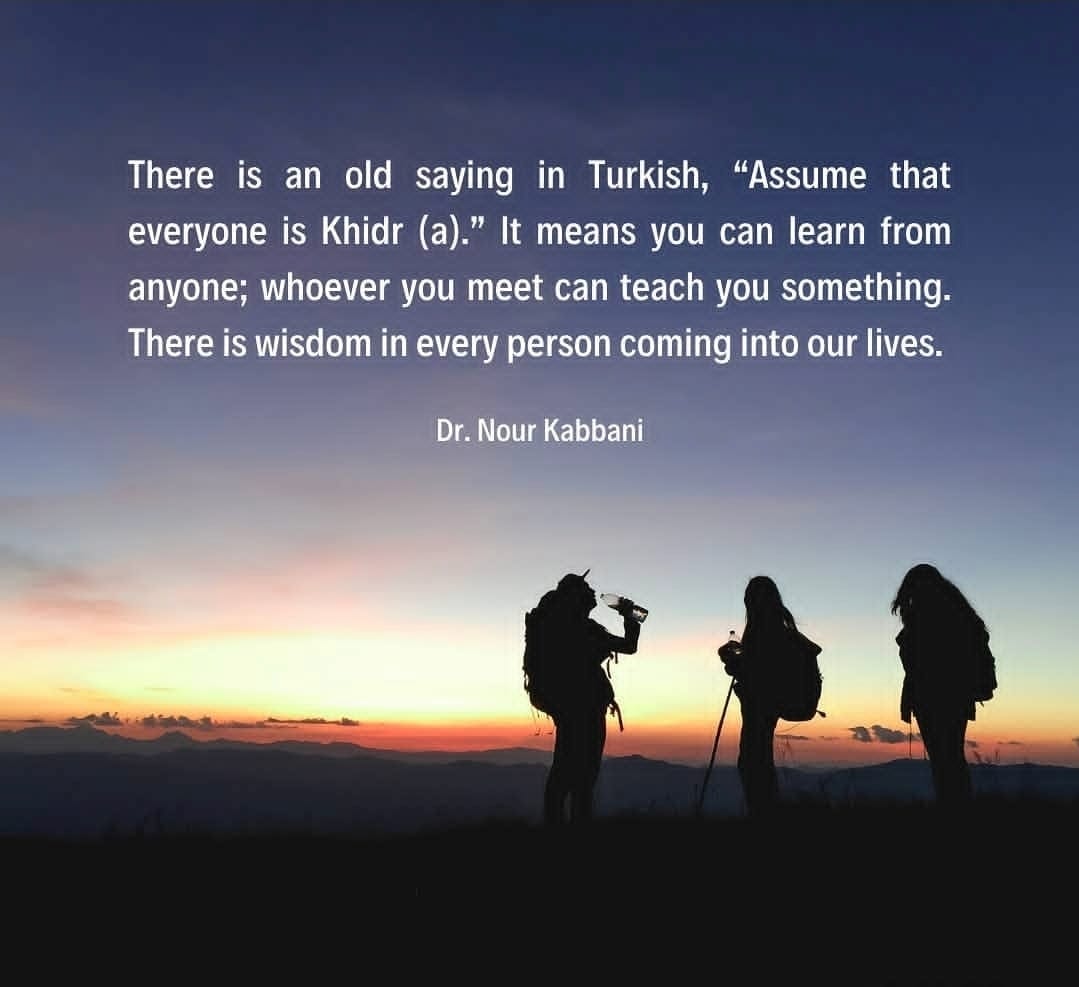
Nevertheless, I still come across many Muslims—and at times even scholars—who discourage engaging with non-Islamic sources, viewing them as dangerous.
I understand the concern behind this. But at the same time, this mindset can severely limit us spiritually in ways we don’t realize.
Because part of our growth is learning to recognize the signs of Allah beyond what is familiar to us.
To do that, we need to develop baseerah (بصيرة)—spiritual insight, inner vision, and discernment.
When we approach knowledge with sincerity and grounding, we begin to see that truth is not confined to one language, one culture, or one field of study. Allah is the Creator of all things, and He has distributed knowledge, abilities, and insights across humanity to help each other.
Personally, my love and understanding of Islam have deepened every time I’ve seen its principles reflected in fields like psychology or science. It reminds me that everything ultimately traces back to Allah.
At the same time, we have to be careful of a subtle trap: assuming that being Muslim automatically means we embody truth more than others.
Taking knowledge from a Muslim, does not a guarantee wisdom.
We have all seen examples where this assumption leads to harm, where people are followed without question simply because they appear knowledgeable or hold a religious position.
This is why sincerity requires more from us.
It asks us to seek truth with humility, to verify how our heart feels about something we hear or learn, verify what we take in, and to remain open—while staying grounded in our faith.
Because in the end, this path is not about labels.
Sincerity is a journey.
It grows, it deepens, and it reveals itself over time.
And Allah, in His mercy, does not expect us to have it perfected from the beginning.
He asks us to keep trying.
To keep returning.
To keep choosing Him—through our actions, not just our words.
So if you feel like you are not there yet, that doesn’t mean you are insincere.
It means you are still on the path.
Keep going.
Keep acting.
Keep showing Allah, in the small and big ways, that you truly want Him and His guidance.
Because every sincere step is seen.
And nothing done for His sake is ever lost. ❤️


