When We Disguise Fear as Tawakkul (Trust in Allah)


People rarely say out loud:
"Allah isn't helping me."
Instead, they say things like:
"I feel alone."
"Nothing ever works out for me."
"No one is there for me."
"I'm always doing everything by myself."
"I've been praying for years and nothing changes."
Underneath all of those is often the unspoken question:
"Where is Allah's help?"
I lived most of my life surrounded by divine help I could not recognize, because my upbringing had unknowingly trained me to miss it.
When I learned about the recent earthquakes in Venezuela, I found myself watching the stories that often emerge after disasters—the stories that seem almost impossible.
Someone pulled alive from beneath collapsed concrete after hours. A stranger who happened to be in exactly the right place. Rescue teams reaching a survivor just in time. Again and again, I witnessed Allah's beautiful way of helping one person through another whenever He has decreed that a life should continue.
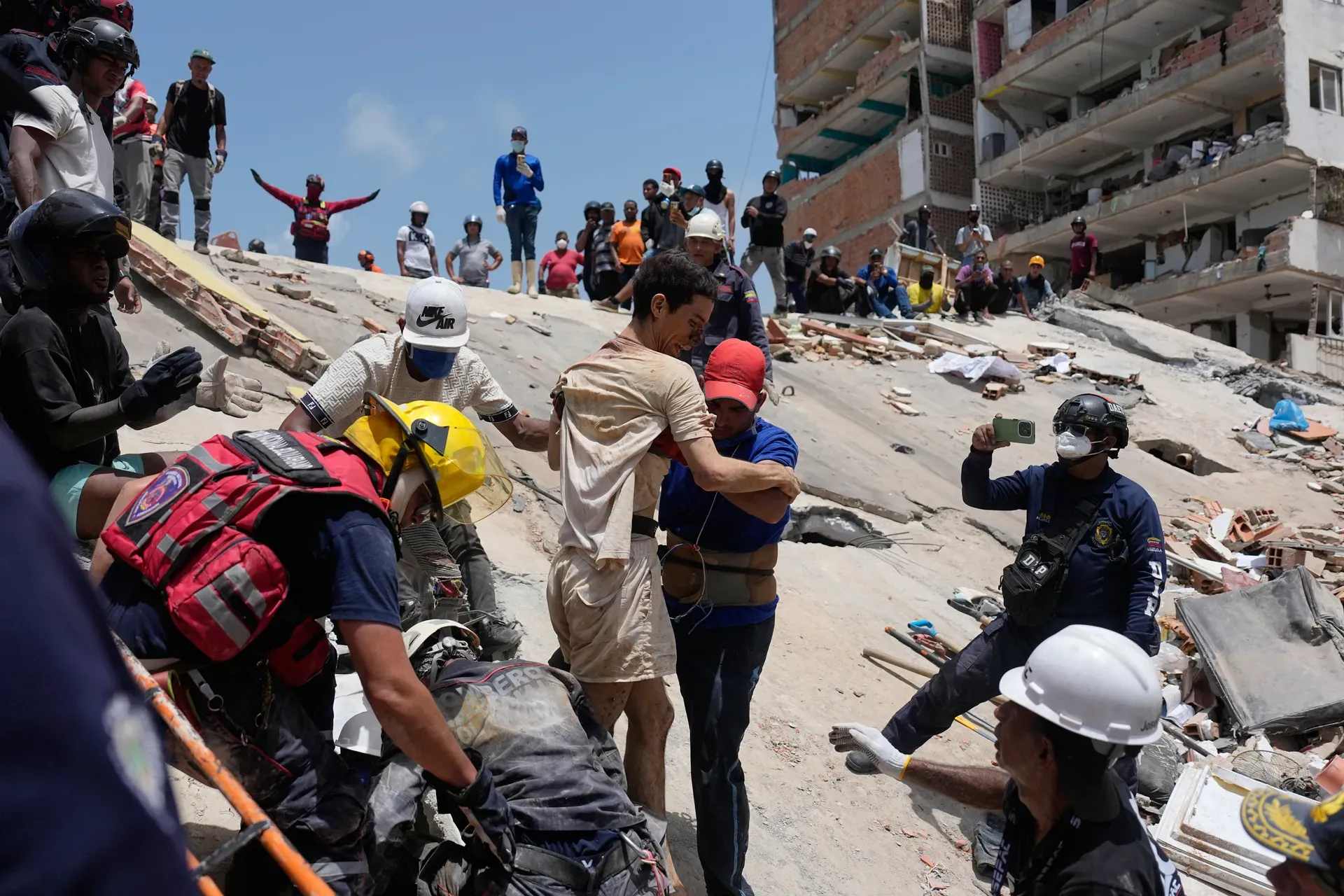
As I watched these stories unfold, I found myself reflecting on my own journey toward awakening to Divine assistance. I realized that the many years I lived blind to it were also years marked by intense anxiety, fear, fragility, and a deep sense of helplessness—a helplessness that, paradoxically, kept me from seeking the very help I longed for.
The beliefs that quietly shaped my life sounded something like this:
If I reach out for help, no one will care. And if no one cares, that pain will hurt even more than the situation I'm already in. Maybe it will be more than I can bear. So I'd rather not ask. I'll stay like this. If Allah wants to help me, He will.
Without realizing it, I had turned not asking for help into a form of self-protection. I wasn't protecting myself from my circumstances; I was protecting myself from the possibility of being rejected once again.
So many of us grow up feeling unsupported and alone, even if we have a large family or many people around us. Some of us may not even have many people around us. These thoughts led me to remember the child I once was.
I grew up in a home where one belief slowly became part of my identity: if I felt neglected, terrified, or sad, no one was coming to help me deal with these emotions.
Yes, of course I was taken to the doctor when needed, I was given an education, and, from the outside, I appeared to have what most would consider a “good life” in a middle-class family that met all my material needs. Yet the profound terror I felt at being alone with my mother was something I could never explain at that age, and it seemed no one noticed it either.
It wasn't merely an idea. It was the emotional reality I lived in every day. I learned not to ask for help because asking felt dangerous. It felt safer to expect rejection than to risk hoping someone would care.
Years later, I realized that this wound had quietly followed me into my relationship with Allah.
I believed in Him, yet I struggled to believe that His help could truly reach me. I could recite verses about His mercy while still carrying a nervous system that expected abandonment. Whenever life became difficult, my first instinct was not to turn toward help but to brace myself against disappointment.
What has slowly transformed me is paying attention to a simple but irrefutable reality:
For as long as Allah has written life for us, help is always available.
It may not arrive in the form we imagined. It may come through strangers, through loved ones, through unexpected opportunities, through wisdom that suddenly appears, or through an inner strength we did not know we possessed. But Allah has never been limited in the ways He sends His support.
The hardest part is not believing that Allah can help us.
The hardest part is allowing ourselves to become vulnerable enough to believe that we are worthy of receiving His help.
Divine help does not begin when Allah decides to help us. It begins when we become able to recognize that His help is always available—and that sometimes we may need to ask in order to receive it.
We don't only fear that nobody will help us, we fear discovering that nobody will.
Those are different fears.
The second one is why we don't ask.
Because asking creates vulnerability.
And if your nervous system learned as a child that vulnerability was dangerous, then not asking becomes a survival strategy.
The tragedy is that what protected us as children continues to imprison us as adults.
I came to understand that this was one of the main reasons I used to fear almost everything in the world. After all, how can someone feel confident and supported when they believe the world is dangerous and that they will be left alone if they are in danger?
Yes, of course, very sad and horrible things happen around the clock, where people are left alive but carrying immense trauma and deep wounds. But at least for me—coming from a background where my “chances of healing my complex trauma” were considered very difficult according to psychology—I can say this with certainty:
No wound is impossible to heal. What makes it feel impossible is our belief that our pain is greater than Allah’s power and mercy. And this is why, when we truly internalize the meaning of Allahu Akbar—that Allah is greater than anything we face—no wound remains beyond healing.


